Unity is often spoken of as an ideal. Within the 100 Families Initiative, unity is practiced as presence—showing up for individuals and families when systems are complicated, stakes are high, and outcomes feel uncertain.
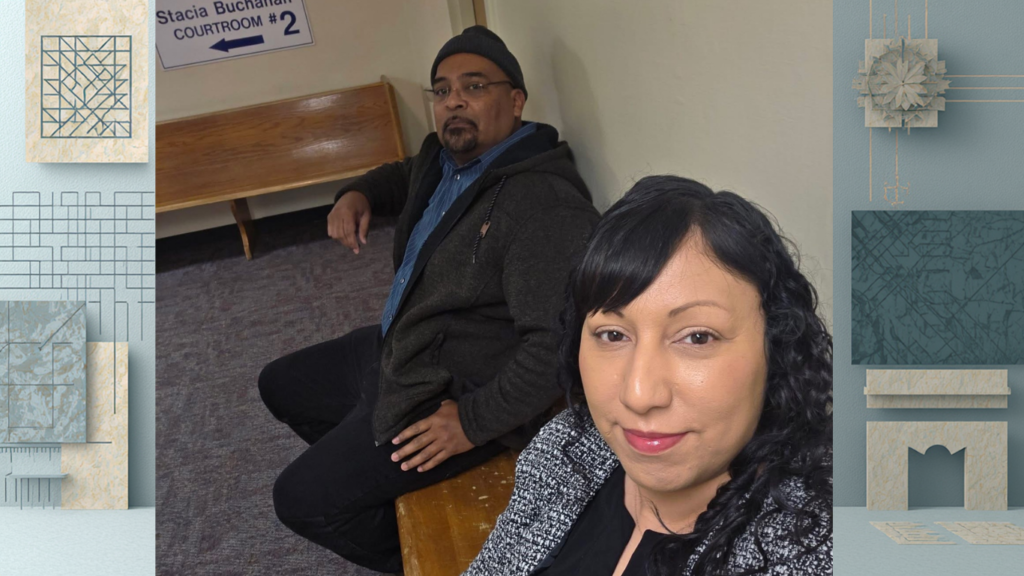
One partner that embodies this kind of unity is Ripple Effect Participatory Defense, led by Elias Williams and Melinda Williams. Their work centers people who are often invisible in the criminal legal process, ensuring that justice involvement does not automatically cut individuals off from opportunity, care, and community.
“A.” (name changed for privacy) is a young adult facing a serious felony charge and the possibility of life in prison. The legal process was overwhelming. Untreated mental health needs and limited employment options compounded the stress, leaving A. isolated and disconnected from support systems long before stepping into a courtroom.
Through the 100 Families Initiative, Ripple Effect walked alongside A. to navigate the judicial process—offering preparation, clarity, and emotional support during court proceedings. But the work did not stop there. While Ripple Effect focused on legal advocacy, other partners within the 100 Families network addressed barriers beyond the courtroom—connecting A. to mental health resources, employment support, and community-based care.
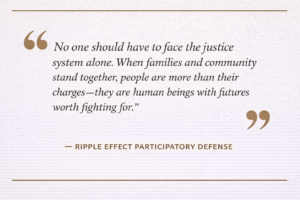
This is what unity looks like in practice. Justice advocacy does not operate in isolation. Mental health support does not stand alone. Employment pathways, housing stability, and community connection are woven together so individuals are supported as whole people—not defined solely by their charges or circumstances.
Ripple Effect’s leadership is rooted in lived experience and a belief that accountability and dignity can coexist. Their partnership within the 100 Families Initiative demonstrates that when systems work together, even those facing the most serious challenges are not abandoned—but accompanied with integrity, compassion, and hope.